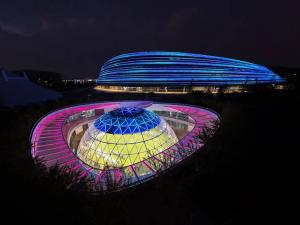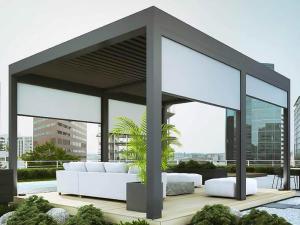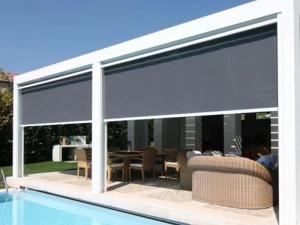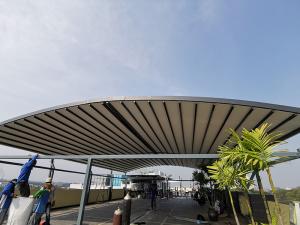
At Canobbio Asiatex, we don't just build canopy roofs; we engineer open-air experiences. With over two decades of dedicated experience in the tensile membrane industry, we have established ourselves as a trusted partner for architects, developers, and homeowners worldwide.
If you are looking for a durable, aesthetic, and intelligent shading solution, here is why Canobbio Asiatex should be your first choice:
1. Two Decades of Proven Industry Expertise
Since our inception, we have completed hundreds of successful projects across different climates and terrains. From tropical high-heat zones to regions with heavy snowfall, our 20+ years of practical experience mean we have encountered and solved every structural challenge. Our engineers know exactly how to handle complex load-bearing requirements, ensuring long-term safety and stability.
2. Superior Material Sourcing & Uncompromising Quality
We understand that the lifespan and beauty of a tensile structure rely heavily on the fabric. That is why we use only premium-grade membrane materials sourced from world-leading brands (such as Ferrari, Heytex, or Serge Ferrari). Our materials feature high self-cleaning properties, UV resistance, flame retardancy, and exceptional anti-aging performance, ensuring your canopy stays pristine for years with minimal maintenance.
3. Advanced Engineering for Extreme Weather Resilience
Our structures are not just aesthetically pleasing; they are engineered for survival. We utilize sophisticated BIM (Building Information Modeling) and 3D force-analysis software to precisely calculate prestress and wind loads. Our systems are capable of withstanding severe typhoons and storms (up to 10-grade winds). Furthermore, for maximum safety in extreme weather conditions, we offer dual-protection designs with detachable membranes, allowing for quick removal before catastrophic super-typhoons, a feature specifically tailored for high-risk coastal areas like Guangdong.
4. Unmatched Customization & Architectural Aesthetics
We believe every space is unique. Whether you need a commercial architectural landmark, a residential rooftop oasis, or a large-scale sports stadium shading, our design team collaborates closely with architects from the concept stage to reality. We offer boundless flexibility in shape, color, and structural styles to complement your building perfectly.
5. One-Stop Turnkey Project Management
Choosing Canobbio Asiatex means avoiding the hassle of managing multiple vendors. We provide a complete "Design - Manufacturing - Installation" turnkey service. Our skilled fabrication workshop produces high-precision steel frames and fittings, and our professional installation crews ensure fast, safe, and clean on-site assembly, minimizing disruption to your daily life.
6. Responsive After-Sales & Maintenance Support
Our relationship doesn't end after the installation. We offer comprehensive after-sales services, including periodic structural inspections, fabric cleaning guidance, and even membrane replacement or re-tensioning services. We stand behind our products with reliable warranties, giving you complete peace of mind.
Ready to elevate your space with a premium tensile structure?
Whether it's a stylish pergola for your garden, a high-tech shading system for your rooftop, or a large commercial canopy, Canobbio Asiatex has the expertise to bring your vision to life.
Visit us at www.cantensile.com or contact our team today to receive a free design consultation!
Tensile structures are becoming more popular because they fit several contemporary architectural priorities at once: long spans, lightweight construction, sustainability, speed, and iconic form.
1. Extreme structural efficiency
Membranes and cables work almost entirely in tension, which is the most efficient way to carry loads. Unlike beams or columns, tension elements do not buckle, so they can use material very efficiently. This allows very large column-free spans with relatively little steel or concrete.
2. Lightweight = lower cost and less material
Because the structure itself is light, foundations, supports, and substructure can be smaller. That reduces material use, embodied carbon, transport costs, and erection time. For covering large areas—stadiums, airports, plazas—this can be much cheaper than conventional roofs.
3. Fast prefabrication and installation
Membranes and cables are usually fabricated in a factory, then tensioned on site. This shortens construction time and improves quality control. It also makes tensile structures attractive for temporary events, exhibitions, and demountable buildings.
4. Design freedom and striking aesthetics
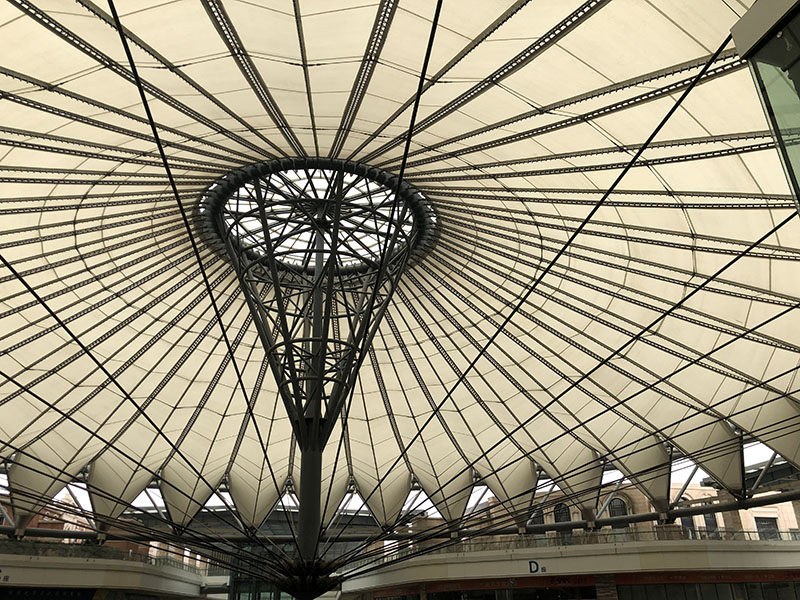
Tensile structures can form flowing, organic, double-curved surfaces that are hard to achieve with traditional rigid structures. Architects use them for landmark buildings, stadiums, pavilions, and transport hubs. Digital form-finding and parametric modeling have made these complex shapes much easier to design and engineer.
5. Material and technological advances
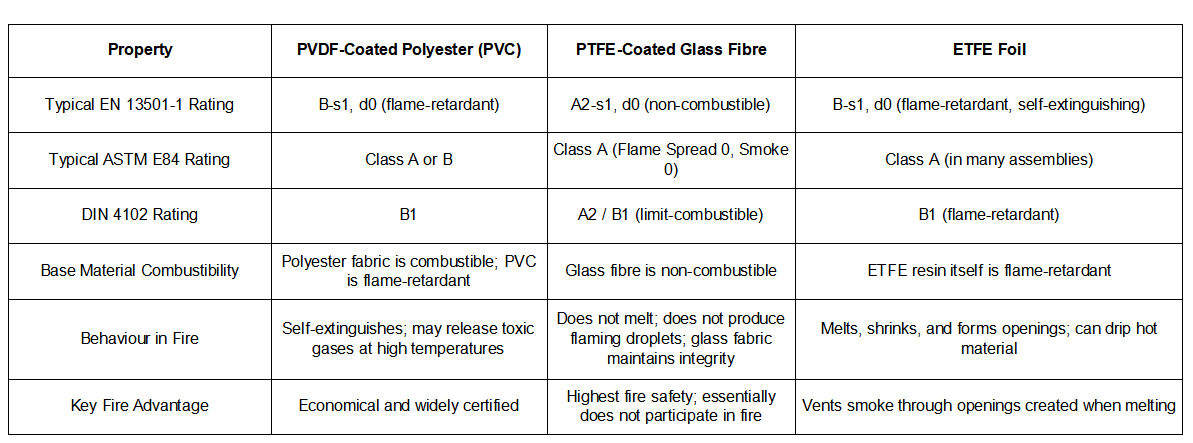
Modern materials such as PTFE-coated glass fiber, PVC-coated polyester, and ETFE foils are stronger, more durable, self-cleaning, fire-retardant, and translucent. High-strength cables and improved analysis software have also expanded what is possible.
6. Sustainability and daylighting
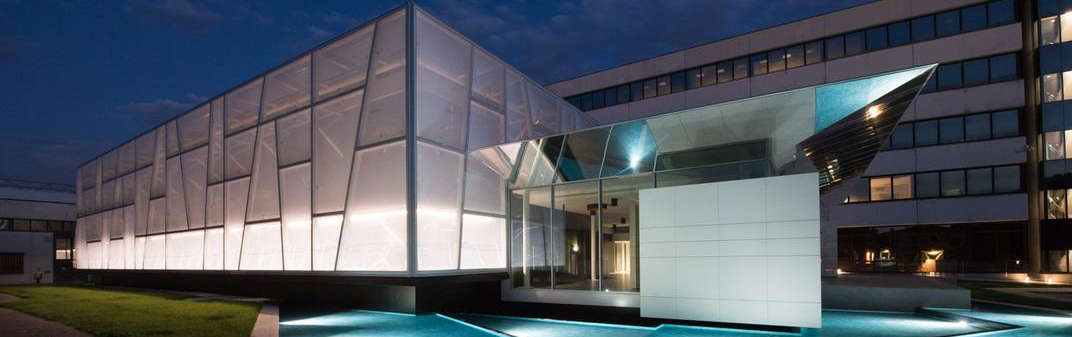
Tensile roofs can be translucent, reducing the need for artificial lighting. They can provide solar shading, encourage natural ventilation, and use far less material than conventional long-span roofs. Some systems can integrate photovoltaics or rainwater collection.
7. Functional flexibility
They are excellent for weather protection, UV control, and creating large sheltered public spaces. Retractable and convertible tensile roofs are popular in stadiums and arenas. They can also cover existing courtyards, streets, or archaeological sites without heavy intervention.
8. Good seismic and wind performance—when engineered well
Lightweight structures have less seismic mass, which can reduce earthquake forces. Their shape can also be tuned aerodynamically. However, wind is usually the governing load, so careful analysis is essential.
9. Urban branding and public space
Cities and institutions often want memorable, photogenic structures. Tensile architecture can create a strong identity and activate public space, which makes it attractive for regeneration projects and cultural buildings.
Caveats
Tensile structures are not always the best choice. They can be challenging for acoustics, thermal insulation, snow loading, rain ponding, and maintenance. They require double-curved surfaces, prestress, and precise engineering. They are also less suited to heavy loads or small, highly insulated buildings.
Overall, tensile structures are popular because they combine structural efficiency, material savings, fast construction, aesthetic freedom, and sustainability—exactly the qualities many contemporary architectural projects are looking for.
Every project starts with concept design and form-finding. Unlike conventional buildings where the architect designs a shape and engineers verify it, tensile membrane structures require the shape and the structural behavior to be developed simultaneously.
Canobbio Asiatex is a company that can provide a complete tensile membrane structure solution.
*Comprehensive One-Stop Service: Canobbio Asiatex specializes in the design, engineering, fabrication, installation, and maintenance of tensile membrane structures. They offer a complete solution from initial concept to project completion.
*In-House Engineering Expertise: Their team handles structural analysis, 3D modeling, membrane patterning, and connection details, ensuring each structure meets specific architectural and engineering requirement.
*Advanced Manufacturing Capability: The company uses specialized equipment, including CNC cutting and high-frequency welding technology, to achieve precise panel dimensions and reliable seams. They maintain strict quality control throughout material selection, fabrication, and installation.
*Material Versatility: They work with a range of materials such as PTFE, PVDF, and ETFE, providing customized solutions for different applications and environmental conditions.
*Proven International Experience: Canobbio Asiatex has completed projects across Greater China, Southeast Asia, the Middle East, Africa, and Europe, covering sports facilities, transportation hubs, commercial spaces, and public architecture. Notable projects include the Macau Olympic Stadium and heritage protection structures in Malta.
*Full Project Lifecycle Support: Their services include after-sales maintenance, ensuring the longevity and performance of the membrane structures.
*Established Reputation: Established in Guangzhou in 2005, Canobbio Asiatex combines international expertise with advanced manufacturing capabilities, positioning itself as a reliable partner for tensile membrane projects.
Canobbio Asiatex: A Trusted Tensile Membrane Manufacturer in China
As modern architecture increasingly demands lightweight, durable, and visually striking structures, tensile membrane architecture has become an attractive solution for stadiums, sports facilities, transportation hubs, commercial spaces, canopies, and public buildings.


 Online service
 +8613600065322
 canobbio@canobbio.com.cn
 +8613600065322